That Sudden Musty Blast: Unpacking the Late-Summer AC Odor
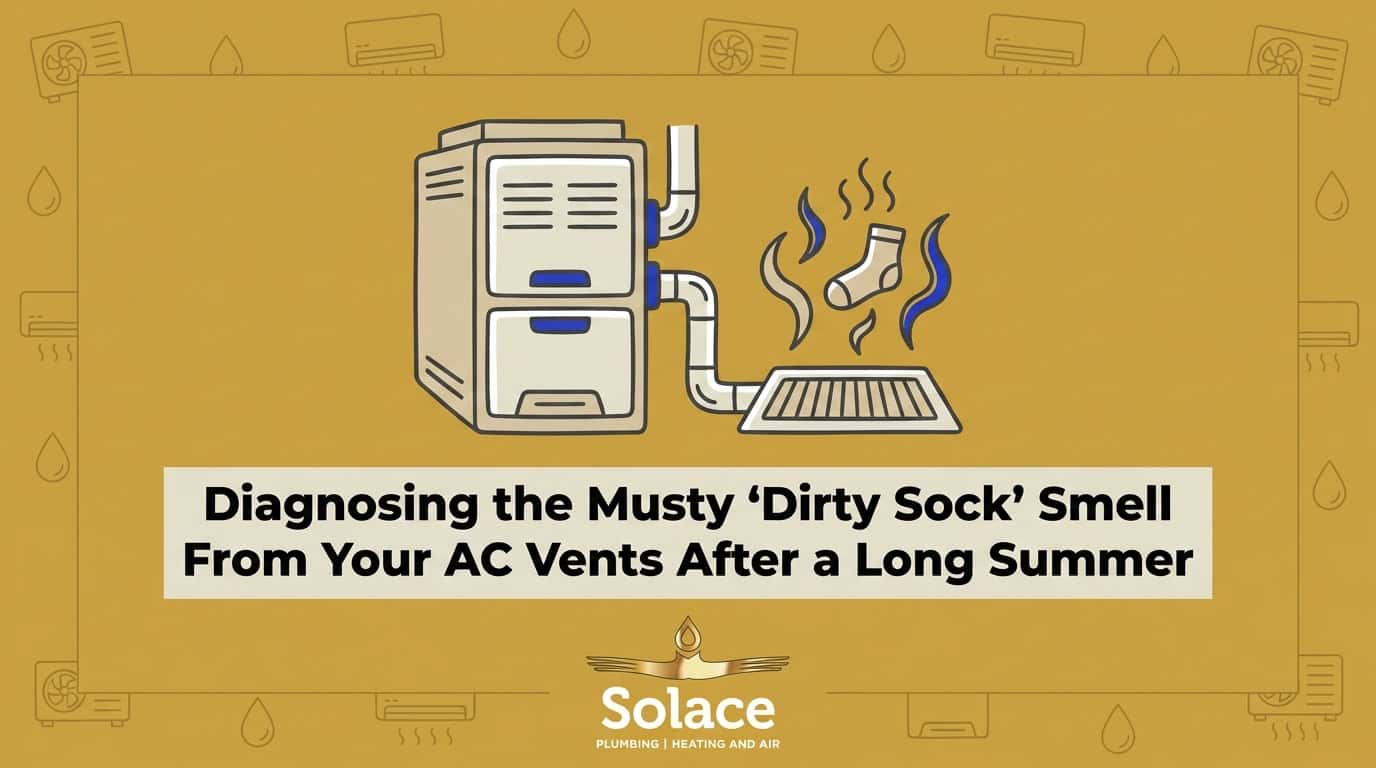
By the time late-summer August rolls around in Southern California, your cooling system has likely been running a marathon for months. At Solace Plumbing Heating and Air, our team fields dozens of calls this time of year from homeowners dealing with a sudden, foul, locker-room-like odor blasting through their home the moment the thermostat clicks on. Diagnosing the musty ‘dirty sock’ smell from your AC vents after a long summer is a common challenge. You expect a rush of crisp, refreshing air as the kids head back to school, but instead, you are greeted by an unmistakable, stale stench that lingers in every room.
This jarring experience naturally leads to an immediate decision point: is this simply a minor nuisance caused by an old air filter, or is there something far more concerning growing deep inside the ductwork? In our experience, most homeowners don’t realize that this specific odor has a distinct seasonal pattern. After months of relentless operation during peak temperatures, the internal components of your HVAC system have been subjected to continuous moisture and darkness. This combination creates an environment that eventually reaches a tipping point.
Addressing this odor promptly is about more than just indoor comfort; it is about protecting your home’s air quality. While a quick filter swap is a great first step, persistent odors usually indicate that the system requires professional AC repair to safely access and neutralize the root cause without damaging sensitive mechanical parts.
What Exactly Is ‘Dirty Sock Syndrome’?
If you are frantically searching for the cause of that musty dirty sock smell from AC vents, you have stumbled upon a highly specific, well-documented HVAC phenomenon. In the heating and cooling industry, this foul odor is officially referred to as “Dirty Sock Syndrome.”
The Biology Behind the Odor
Dirty Sock Syndrome is not a mechanical failure of a motor or a burnt-out wire; it is a biological issue. The smell is a direct byproduct of anaerobic bacteria, mold, and mildew thriving on your indoor evaporator coil. As your air conditioner cools your home, it also acts as a massive dehumidifier, pulling moisture out of the warm indoor air. That moisture condenses on the freezing cold metal of the evaporator coil. When biological airborne particles—like dust, pet dander, and microscopic organic matter—slip past your air filter, they stick to this wet coil. Over time, bacteria begin to feed on these organic materials, multiplying rapidly in the dark, damp enclosure of your air handler. The off-gassing from these microbial colonies is what produces that distinct, sour, locker-room stench.
A Mechanical Issue, Not a Cleanliness Problem
One of the most common misconceptions we hear from our customers is that this odor indicates a dirty home. That simply is not true. Dirty Sock Syndrome is strictly an ecosystem issue contained entirely within the mechanical housing of your HVAC system. Even the most meticulously cleaned, spotless houses can develop this problem because the interior of an air conditioner provides the exact three things microbes need to flourish: moisture, darkness, and a food source (dust). Understanding the science behind the smell is the first step toward permanently eliminating it.
Why Inland Empire Summers Create the Perfect Storm for AC Odors
The climate you live in plays a massive role in how and when this biological growth occurs. Here in the Rancho Cucamonga and greater Inland Empire area, our technicians see firsthand how the local weather actively works against the internal dryness of your cooling system.
The Problem: Relentless Heat Waves
Starting in early June, the region experiences intense, prolonged heat waves that push daytime temperatures well above 100 degrees. To keep your home comfortable, your residential cooling system is forced to run almost continuously. There are very few days where the system can remain off for an extended period. This heavy, relentless workload is the primary trigger for late-season odors.
The Cause: A Perpetually Damp Environment
The physics of air conditioning require the evaporator coil to sweat continuously as it removes humidity. In milder climates, an AC unit cycles on, cools the house, and then cycles off for several hours, giving the indoor coil a chance to dry completely. However, during an Inland Empire summer, the constant cycling means the evaporator coil never fully dries out between cycles. It remains perpetually wet for weeks or even months at a time. By the time August arrives, this permanently damp environment has become the ultimate breeding ground for biological bloom, resulting in the sudden onset of foul odors.
The Solution: Proactive System Management
Combating this regional climate challenge requires an understanding of how moisture accumulates. Ensuring your blower motor is set to the correct speed and having your system evaluated for proper drainage are critical steps in protecting your cooling system during peak summer heat. Recognizing that your local weather naturally encourages this bacterial growth helps you stay ahead of the curve before the smell takes over your home.
The Role of Heavy Condensation During High-Usage Months
To truly grasp why that late-summer August odor is so pervasive, you have to look at the sheer volume of water your air conditioner processes on a daily basis. It is not just a few drops of condensation; it is a heavy, continuous flow.
- Massive Daily Water Production: During the peak heat of summer, a standard residential air conditioner can produce anywhere from 5 to 20 gallons of condensation per day. All of this moisture is pulled directly from your indoor air and condenses on the cold evaporator coil.
- Collection in the Drain Pan: As the water drips off the coil fins, it falls into a shallow metal or plastic tray located directly beneath the coil, known as the condensate drain pan. This pan is designed to catch every drop of water safely.
- Routing and Drainage: The collected water then flows into a PVC drain line, which uses gravity to route the condensation safely outside your home or into a designated plumbing drain.
- The Danger of Sluggish Lines: Over the course of the summer, dust, dirt, and biological slime can begin to build up inside the drain pan and the narrow PVC line. If the line becomes sluggish or partially clogged with algae, the water cannot drain fast enough.
- Amplification of Odors: When standing water pools in the drain pan, it creates a stagnant swamp directly beneath your blower fan. As the fan pushes air over the coil and into your home, it sweeps right across this stagnant water, picking up the musty odors and distributing them through every vent in the house.

Is It Just a Dirty Filter or a Coil Contamination?
When you are hit with a musty dirty sock smell from AC vents, the first step is diagnosing the source. Not every odor requires a deep mechanical cleaning; sometimes, the culprit is much closer to the surface. A severely clogged, moisture-laden air filter can restrict airflow and harbor its own musty smells, mimicking the symptoms of Dirty Sock Syndrome.
Before assuming the worst, safely check and replace your indoor air filter. If the filter is dark, heavy, and smells damp, replacing it might resolve the issue. However, if you install a fresh filter and the foul odor persists on the very next cooling cycle, the source is almost certainly biological growth deep on the evaporator coil. If this is the case, it is time to look into professional AC repair in Corona or your surrounding area.
| Diagnostic Factor | Dirty Air Filter | Evaporator Coil Contamination |
|---|---|---|
| Odor Characteristics | Dusty, stale, slightly damp smell. | Strong, sour, locker-room or “dirty sock” stench. |
| Airflow Impact | Noticeably weak airflow from all vents. | Airflow may be normal, but the air smells foul instantly. |
| Visual Inspection | Filter media is gray, caked with debris, or visibly wet. | Coil is hidden inside the air handler (requires professional access). |
| Resolution | Safe DIY filter replacement immediately stops the smell. | Requires professional chemical cleaning and sanitization. |
Why You Should Never Attempt to Clean the Evaporator Coil Yourself
Once you realize the odor is coming from the coil, the temptation to grab a brush and some household cleaner can be strong. However, attempting to clean an evaporator coil yourself is one of the fastest ways to permanently destroy your air conditioning system.
The extreme fragility of aluminum fins: The evaporator coil is constructed with hundreds of paper-thin aluminum fins tightly packed together. These fins are designed to be as thin as possible to maximize heat transfer efficiency. Because they are so delicate, applying improper pressure, using generic stiff-bristled brushes, or pressing too hard with a vacuum attachment can instantly bend and crush the fins flat. Once the fins are crushed, airflow is completely blocked, rendering the coil useless and leading to catastrophic compressor failure.
The danger of household chemicals: Furthermore, generic household cleaners, bleach, and abrasive detergents are highly corrosive to aluminum. Spraying these chemicals onto your coil can cause pitting, microscopic leaks, and rapid deterioration of the metal, leading to total refrigerant loss.
As a trusted local expert serving Rancho Cucamonga and the Inland Empire, our team at Solace Plumbing Heating and Air operates as the protector of your system’s integrity. Over our years of field experience, we have unfortunately seen too many well-meaning homeowners permanently damage their systems trying to clean the coils themselves. The strict rule of HVAC maintenance is that accessing and cleaning the evaporator coil requires licensed professional tools, specialized foaming agents, and hands-on expertise. Professional diagnostics and safe coil cleaning eliminate odors completely without risking costly, irreversible damage to your system’s most sensitive components.
Professional Diagnostics and Long-Term Odor Elimination
When you bring in one of our licensed technicians to address that late-summer August odor, we do much more than simply mask the smell. Our team performs a comprehensive, multi-step sanitization process designed to reset the internal environment of your HVAC system.
The Professional Coil Cleaning Process
Our technicians begin by safely dismantling the air handler casing to expose the A-coil. We apply specialized, non-corrosive foaming treatments that are specifically formulated for delicate aluminum fins. This self-rinsing foam expands deep into the microscopic crevices of the coil, lifting out dirt, biological growth, and hardened grime without the need for aggressive scrubbing. The foam then safely liquefies and washes down into the drain pan, carrying the foul-smelling bacteria with it.
Clearing the Condensate System
Next, the technician addresses the drainage system. We thoroughly clear and sanitize the condensate drain line and pan, removing any algae clogs or standing water that contributed to the musty smell. This ensures that the massive amount of condensation produced during the remaining hot weeks can flow freely out of the system.
Upgrading Your Defense: UV Light Purification
For homeowners who want to ensure the smell never returns, professionals can introduce preventative upgrades directly into the system. One of the most effective solutions is installing specialized UV lights inside the ductwork, positioned to shine directly onto the evaporator coil. This ultraviolet light disrupts the DNA of mold, mildew, and bacteria, neutralizing biological growth before it can even start. If you are tired of battling seasonal odors, exploring Claremont air conditioning services can help you integrate these advanced indoor air quality solutions into your home.
Breathe Easy Again: Restoring Fresh Air to Your Home
Dealing with a musty dirty sock smell from AC vents is certainly unpleasant, but the short answer is that it is a highly treatable condition. This odor is simply a common byproduct of heavy summer cooling, not a permanent death sentence for your air conditioning system. By understanding how moisture and heat combine to create this biological growth, you can take the right steps to address it.
You do not have to live with a home that smells like a damp locker room. Safe, professional intervention can effectively neutralize the bacteria, clean the sensitive components, and restore pristine indoor air quality to your living spaces. As the intense heat begins to wane and the back-to-school season gears up, our team highly encourages scheduling a comprehensive diagnostic check and coil cleaning. Taking care of diagnosing the musty ‘dirty sock’ smell from your AC vents after a long summer ensures your system is clean, sanitized, and operating perfectly before it is switched over for the upcoming cooler months.
Frequently Asked Questions
Why does my AC smell like dirty socks?
Your AC smells like dirty socks because of anaerobic bacteria and biological growth thriving on the indoor evaporator coil. As the system runs, it collects condensation and dust, creating a dark, damp environment where microbes multiply and release foul-smelling off-gassing.
How do you get rid of a musty smell in AC vents?
You get rid of a musty smell by first replacing your indoor air filter to rule out trapped debris. If the smell persists, you must hire a licensed professional to safely apply non-corrosive foaming cleaners to the evaporator coil and clear the condensate drain line of any stagnant water or algae.
Is dirty sock syndrome dangerous to breathe?
While dirty sock syndrome is highly unpleasant, it is generally not considered highly dangerous for the average healthy person. However, the continuous circulation of biological particulates, mold spores, and bacteria can aggravate asthma, allergies, and respiratory sensitivities, making prompt professional cleaning highly recommended.
Can a dirty AC filter cause a musty smell?
Yes, a severely clogged or damp air filter can definitely cause a musty smell. When a filter traps excessive dirt, pet dander, and moisture, it can harbor its own odors and restrict airflow, which pushes that stale smell directly through your vents.
Will the dirty sock smell go away on its own once the weather cools down?
The smell may temporarily lessen when the weather cools down and the AC stops running constantly, but the biological growth remains dormant on the coil. The moment you switch the system back to cooling or the indoor humidity rises, the foul odor will return until the coil is professionally sanitized.